Theatre and Cinema pages

Ãëàâíàÿ       English       Àííîòàöèè       Ñîâðåìåííàÿ ïðîçà       Äðàìàòóðãèÿ       Ïóáëèêàöèè       Êîíòàêòû


       The sirs the directors of films and producers!
       I offer to your attention to get acquainted with an applications for the film-scripts of feature films – melodramas.

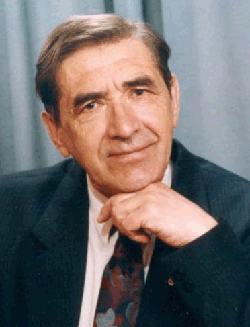
Boris Mikhailov

It is a little about me

       I think I'm a TV journalist. I've been in this profession for over 30 years. I was a corrector, a commentator, a script writer, a director. For over 10 years I have worked in periodical press. In soviet period I published several "ura-patriotical" books. I created some novels and drama works. On pension I got interested in history of religion especially history of Protestantism. I wrote a book "The Transformed Lives", this book is about rebirth of Methodist church in Russia (Methodism is one of the protestant confessions). The book was published in Moscow and its English translation was published in the USA. Recently I have been living in Saint Petersburg.


Modern prose

     Conformist. Memoirs of the provincial journalist about time, a profession and about it self
     I devoted to journalism and literature the life. Ten years worked in local and regional newspapers in Siberia and the Volga region, 26 years at Kuibyshev regional television. Was: reporter, correspondent, editor, screenwriter and director. Not for long worked at pension in Christian book publishing.
     I was lucky to be the witness and the participant of events of the XX century with 40 - x year and pervyes 15 years in ÕÕ1 an eyelid. Consider me as "man of the sixties". On 60 - e years the peak of my creative activity had.
     I hope that not really remote past of Russia, not from dusty archives, and in memoirs of the witness of time, I will be of interest to historians and journalists, and personal pages - to fans of memoirs and my children The complete text is present only on Russian.
     The complete text is present only on Russian.

     Scythian treasures of ordinary Wehrmacht (Gold of Scythians)
     During the second World War Ervin Vaker -the main character of novel served in the Crimea. He executed a special Reich mission. He took part in excavations of ancient burials and in museum exhibit selection which wasn't evacuated. Everything what was found was sent in Reich - Scythian vases and amphores, marble blocks with reliefs of gryphon and other monsters, golden and bronze articles. In 1944 after retreat from the Crimea, part of treasures wasn't taken out, it was buried in private courtyard near Theodosia. After more than half a century 78 years old Ervin with a nephew passing of as a tourist came in Theodosia to dig out some treasures.
     Simultaneous with the first one there is a second part of a novel - a love story between teacher and translator from Theodosia - Elena and "new Russian"- Igor, who came here for business. Elena falls in love with him like a young girl. Igor is a romantic person like Elena. His wife died two year ago and Elena reminds her.
     The complete text is present only on Russian.

     The girl from Samara won Rublyovka
     A love story about a young woman, lucky in business and unlucky in his personal life, the history of the formation of the business woman of the XXI century. Her adventures, communication with business people, wives of the "powers that be" will be interesting and useful to the dreamer, deriving knowledge of the world of glossy magazines, and readers, complaining about a failed life, instead of most to work, study, the most actively make a decent living.
     The complete text is present only on Russian.

     Provincial passions of times of Yeltsin
     The novel about life of the Russian province in 80 - 90 - x years against destinies of journalists of regional studio of television, the artistic world and representatives of local government. History about love and elective campaign of the mayor, with erotic stories which heroes of the novel collect for the future book "Decameron of XXI".
     The complete text is present only on Russian.

     German love of Seva Vasilyev
     St. Petersburg, 2010. The main character of the future film Vsevolod Vasilev or Seva comes back home and finds his wife in tears. In her hands there is a letter and a foreign envelope. A scene of jealousy. From the letter Elen, his wife, finds out that Seva more than twenty years ago, even before she had met Seva was in Germany and England, had a girlfriend Marica there and never told her about it. Now Marica comes to St. Petersburg and arranges to meet him. Seva recollects events for 1970.


Dramatic art

     Women who reject men
     Lesbians
     One of the rare, if not the first in Russia plays about the world of lesbians.
     The main idea is homosexuality - unconscious choice of a person, it is not a fashion or short liking. Homosexuality is natural process. And everything what was created naturally and what is difficult to understand we can't reject. We can only envy a person who is really happy.
     The accident prompted the editor and the screenwriter Irina, to devote one of the family TV shows to lesbians.
     One of the presenters of the competing channels was fired when officials of the channel had learned she was a lesbian.
     Got acquainted with the circumstances and delved into very unfamiliar issue, Irina set a goal for future program: to encourage ordinary people to tolerate those with not traditional sexual orientation. During a preparation she meets with different people sometimes in difficult moments of their life.
     As a result of the preparation of the TV show that clashed with her own family troubles, Irina faces the dilemma to become a lesbian herself.
     The complete text is present only on Russian.

     Meeting before the television program
     A drama. He and She. . This is a play for two actors. TV editor visits a character of future program - popular author of detective novels, to meet and coordinate some questions he will be answer. There are some feelings or maybe love between them after meeting and then their joint visit on high-social party.
     The complete text is present only on Russian.

     My manor
     A drama. The play is telling about the new "society elite", who made their fortunes in most cases in a sinister manner and having legalized them now, they are striving after getting noble, to add social and intellectual gloss, to get a title of nobility. There are also characteristic features of the new "masters of life" - hang-outs, adultery, revenge of left women, a little bit of erotic, striptease and so on.
     The main character Vadim Nicolaevich Vasiliev - a 36 years old bank of commerce executive, like many of his herd mates, too young in the epoch of gangster-like capitalism, married a "ready capital'. A job in the bank led to becoming really rich and independent from his benefactor, divorcing with his wife and marrying a twenty year old beauty - translator Larisa.
     Following the fashion, he started studying his family tree and did not find any people of title, but that did not stop him. Whereas lots of Russians just purchase titles, since there was a special company in Russia designated for selling them, Vasiliev hired lawyers to "prove" his noble origin. He charged realtors to find a village with his name- Vasilevka, bearing in mind that one can find places with such a name almost in each region.
     A dying out village was found in about 150 km away from Moscow, in Kaluzhsky region. Vadim purchased the land, restored the destroyed manor house. Having forced lots of obstacles, he gets the long expected title - he becomes a prince.
     All his friends, classmates, the first wife Tamara, who is now in friendly terms with him, are coming to celebrate this in his restored former manor house. Also intending to cause the quarrel between him and his wife his lover Rita finds her way to the party…
     The complete text is present only on Russian.

     Omnia vincit amor
     ( Love conquers all )
     A drama. A play about love between middle-aged and well established people. When they were young they used to have a relationship but life separated them. They met again years after and their feelings sparked again. She is a respectable lade, a professor, PhD in philosophy. He is an orthodox priest, a widower. She is lonely and is trying to find meaning to her life through God. She likes the teachings of a protestant church. Love helps her to find the true thing. The orthodox religion doesn’t allow the priest, who is a widower, to get married again. He encounters a difficult choice – earthly happiness or his ministry to the Lord and people.
     The complete text is present only on Russian.

     Call from the future life
     A mystic tragic comedy. A 49 year old well-to-do journalist and writer, a great womanizer and a widower, has got a serious heart disease. He’s had a heart attack. Recently his disease has become worse. Suddenly his beloved deceased wife calls him to say he’s expected ‘there’. Urgently. If he still loves him and wants to meet her there, he should apologize to all the people he has ever offended. Primarily, apologize to his numerous mistresses. The main character, as well as spectators, often can’t tell apart his real conversations with his wife and his hallucinations, but he’s trying to fulfill her request.
     The complete text is present only on Russian.

     Fiances from computer
     The heroes of the play - young university scientists find themselves out of financial backup for their researches, but they do not surrender to despair. They find a solution to combine the researches and commerce. The young men organize an experimental marriage agency (EMA) at the physiologies department. Analytical psychologists, thanks to computer-aided technologies, they start putting together and giving consultations to couples - their compatibility, habits and other humanities. Besides creative satisfaction, the job brings financial independence. The activity of the agency causes envy and plots of the colleagues, competitors. Complaints to local authorities, crowds of controllers attract newsmen's attention. Though, EMA is not really fond of newspapermen - they are always refused to meet and to speak to. Then the newsmen incognito under the guise of clients needle into the agency.
     To find your couple in our violent times of abundance of information and open borders still remains a problem. The play describes a progressive chance to meet an interesting person - to take an advantage of revived matchmakers' institution services - not only traditional but also modern - electronic. The spectator will face a sequence of people of different sex and age and social status.
     The complete text is present only on Russian.

     Afghan Love
     This play is about heroism and internationalism, about love between a soviet officer and revolutionary afghan girl.
     This story is about 19 year old boys who passed a difficult way before they understood their important mission in the internecine war of feudal races in foreign country.
     The conception of story is Heminguay's thought: "There are no foreign countries. It doesn't matter where you'll die if you die for the liberty." This story is about love and war. This isn't a traditional conception on Afghan Company 1979-1989. Old soviet militaries and government officials made a lot of mistakes but the main idea to protect frontiers from our enemy and save the country is right. Action of the story is the last days of our army in Afghanistan. There are song about Afghan war, songs of Rosenbaum and others poets during all the play.
     The complete text is present only on Russian.

     SANTA - LUCHIA
     A Plot of a Musical Melodramatic Film
     Luigi, the father of the main character of the film, used to fight in the international brigade in Spain. After republicans defeat he couldn't go back to his motherland. Mussolini's fascist regime reigned there. Luigi had to immigrate to the USSR. Together with other foreigners he used to build Moscow subway. Having a wonderful voice, he used to sing in the evenings in the yard of a big multi-storied block of apartments where foreigners used to live. For concerts and dances young people came from the neighborhood. Luigi falls in love with a Russian girl Katya. In 1940 their son Volodya is born. When WW II broke out and Hitler's troops came close to Moscow, all foreigners were sent to a far away country of Kazakhstan. A year-old Volodya was separated from his mother.
     After the war in Italy a government crisis broke out and communists got a real chance to capture power. Then Stalin remembered the exiled Italian communists and sent them to Rome to help out. That's how Luigi with his son ended up in Italy. Communist reign couldn't be established but the party continued to work legally. Till his very last days Luigi remained an active member of the Central Committee of the Italian communist party. Little Volodya used to help his father since his early days. Distributed leaflets, sang in the streets, raised money for publication of the communist newspaper 'Unita'. As a young man, for his participation in the meetings of protest he has been arrested and put in jail. He graduated from university and taught in college, in the evenings he learnt singing. Concerts, summer tours with the opera house in provinces made him forget the romantic hobbies of his youth and he left politics. Singing occupied all his free time and soon became not just his hobby, but a real profession. Since he didn't have contracts with the opera houses, he was still teaching at his college.
     All these years Volodya has been looking for his mother, but the iron curtain couldn't have been torn. Only in 1970 through the Red Cross he found out that his mother was alive and got hold of her address. They started corresponding. In three years Volodya gets permission to go the USSR and visit a town on the Volga called Privolzsk, which is closed for foreigners. At last, 32 years later, the mother and son met up!
     In Privolzsk Volodya meets Olga, local opera star. Between the young people passionate love sparks. On his own and together with Olga, Volodya takes part in concerts, sings for Olga's friends at picnics. KGB doesn't approve of Olga's contacts with a foreigner. For a picnic without permission, Volodya's visa is cancelled and he's sent out of the country. Fate separated the lovers. They miss each other, write letters, which never come through.
     The film starts with Volodya's arrival to Russia and his meeting with the mother. His stepfather and mother take Volodya for the weekend to the lake, to have fun and go fishing. There, sitting by the campfire, Volodya sings Russian love songs and attracts audience. Olga is among them. Volodya is hiding the fact that he is a foreigner and a professional singer. The next day the factory where his mother Ekaterina Ivanovna works, is celebrating its anniversary. There's a concert to celebrate the occasion. Volodya is invited to take part in the concert. So is Olga. They meet up again. At the concert, listening to Santa-Luchia performed by her son, the mother keeps thinking about her youth, the way Luigi used to sing it, and it seems to her that Luigi, but not her son, is singing now. Ekaterina Ivanovna remembers their first dates, their son birth, and the last night when big trucks arrived to take away all foreigners and her one year-old son.
     After the concert Volodya invites Olga for a date. A love affair starts. Passionate love sparks. They have dates every day. At Olga's place, at picnics, in the theater during rehearsals. They speak of eternal love. Because of long trips to the countryside and the city regime, Volodya is refused a visa and is sent out of the country. The lovers are shocked, but this is life.
     Twenty years have passed, there's no iron curtain, and the borders are open. With her theater Olga takes part in the Russian Culture Days in Germany. Volodya sees her on television and hurries up to see her. Passionate love starts with renewed strength. But now they've got their own families and kids.
     The complete text is present only on Russian.